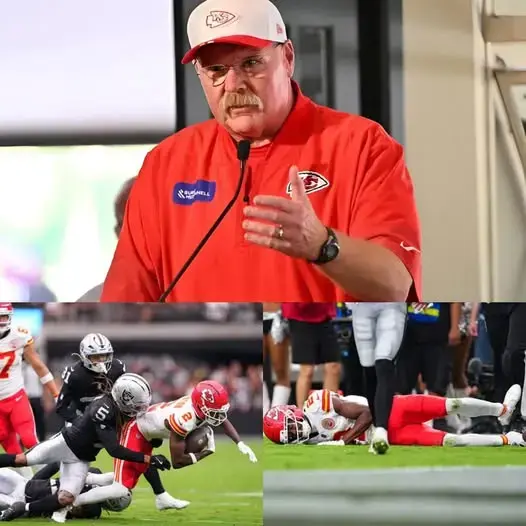
🚨 KANSAS CITY CHIEFS WIN 30–27, BUT THE REAL EXPLOSION CAME AFTER THE FINAL WHISTLE — KLINT KUBIAK ERUPTS, AND ANDY REID’S ICE-COLD RESPONSE STUNS THE ROOM
The scoreboard said Kansas City Chiefs 30, Las Vegas Raiders 27. In this fictionalized NFL scenario, however, the three-point difference was almost an afterthought by the time the postgame press conferences were over. What had already been portrayed as another bruising chapter in one of football’s fiercest rivalries suddenly exploded into something far bigger when Raiders head coach Klint Kubiak walked into the press room carrying the frustration of a heartbreaking defeat — and unleashed a series of accusations that immediately shifted every conversation away from the field.
Kansas City had supposedly survived a tense, physical contest in which neither side managed to create meaningful separation. Every possession felt significant. Every third down seemed capable of changing the night. And when the Chiefs eventually escaped with a 30–27 victory, the fictional atmosphere surrounding the Raiders was one of disbelief rather than simple disappointment.
Kubiak entered the imagined postgame media room visibly frustrated.
Then came the remarks that would supposedly ignite the controversy.
“Let’s not kid ourselves,” Kubiak says in this dramatized version of events. “Kansas City didn’t win because they played better football — they won thanks to the power of money.”
It was an extraordinary accusation.
In the fictional remarks supplied for this story, Kubiak alleged that Kansas City had used financial muscle to create an unfair competitive advantage and then turned his anger toward the officiating.
“They used their spending power, splashing cash everywhere to buy themselves a victory, and a victory bought with money like that is nothing to be proud of,” the fictional quote continued. “And not only that, the referees kept blowing whistles on ridiculous, unjustified calls that left us completely suffocated and frustrated all night long.”
The imagined room went quiet.
Reporters who had expected questions about defensive adjustments, missed opportunities and late-game execution suddenly found themselves confronting an entirely different story.
Kubiak’s fictional tirade effectively questioned both Kansas City’s competitive legitimacy and the fairness of the officiating.
For an NFL rivalry already loaded with history, that would be gasoline poured directly onto a fire.
The Chiefs and Raiders do not need additional reasons to dislike losing to one another. Their rivalry stretches across generations, divisions, playoff races and wildly different eras of professional football. Even during seasons when one franchise has been stronger than the other, meetings between Kansas City and Las Vegas have rarely felt ordinary.
This hypothetical 30–27 finish would be no exception.
The Raiders had supposedly pushed Kansas City until the final moments. They believed they had opportunities to win. They believed several crucial moments could have gone differently.
But frustration over officiating is one thing.
Accusing an opponent of effectively purchasing success is another.
And Kubiak’s fictional comments went even further.
“Meanwhile, we’re out here building our program through pure passion and the authentic love of the game,” he says in the scenario. “We’ve got players and coaches who show up for the love of football — not to compete against a checkbook.”
If remarks like those were ever actually made publicly, the league would almost certainly face immediate questions about their context and meaning.
But inside this dramatized storyline, attention immediately shifted toward one man.
Andy Reid.
The veteran Kansas City head coach has spent decades developing a public persona almost completely opposite to the emotional explosion attributed to Kubiak in this fictional scenario.
Reid rarely appears interested in winning wars of words.
He talks football.
He protects his players.
And when controversy begins circling his team, his responses are often measured rather than theatrical.
That made his imagined answer even more devastating.
Asked about Kubiak’s accusations, Reid supposedly paused briefly before responding.
“We don't buy wins. We earn them.”
Six words.
Nothing more was necessary.
The fictional press room immediately changed.
Instead of launching into an angry defense of the organization, Reid had reduced the entire controversy to one simple statement.
Then he elaborated.
“You can talk about money. You can talk about officials. You can talk about whatever you want after a game,” Reid says in this fictional scenario. “But those guys in that locker room earned every yard tonight. Nobody handed them anything.”
It was the kind of response that would instantly become headline material.
Not because Reid screamed.
Because he didn’t.
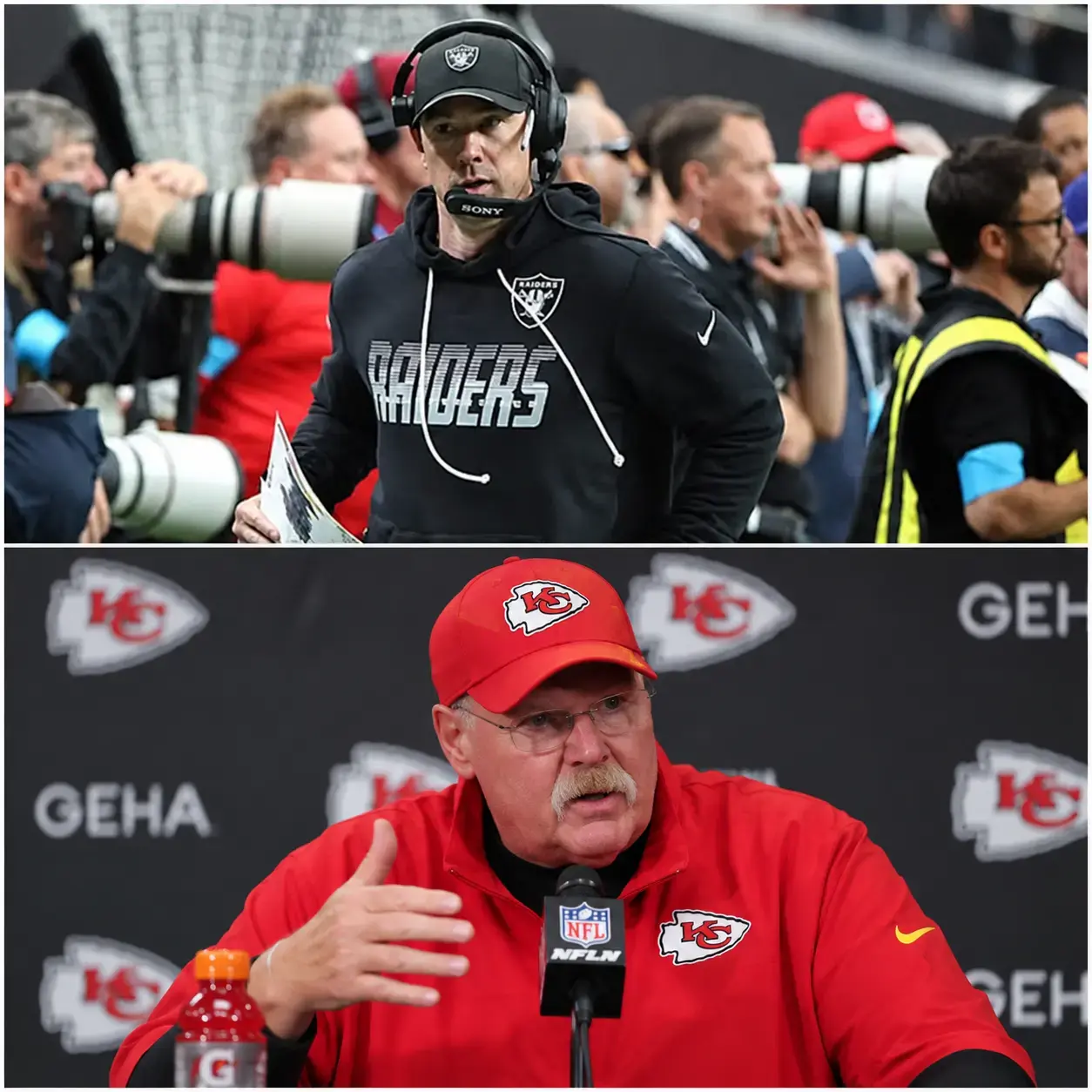
The contrast between the two fictional press conferences could hardly have been greater.
On one side was anger, accusation and frustration.
On the other was restraint.
Reid refused to attack Kubiak personally. He did not ridicule the Raiders. He did not claim Kansas City had dominated.
Instead, he redirected attention toward the players.
“Games like that come down to execution,” Reid continued in the dramatized exchange. “They played hard. We played hard. We made enough plays at the end. That's football.”
That final sentence carried the sharpest edge.
That’s football.
In other words, Reid’s fictional message was clear: Kansas City did not need an elaborate explanation for why it won.
The scoreboard was the explanation.
30–27.
For Chiefs players, the imagined controversy would likely become another example of the scrutiny that follows sustained success.
Winning repeatedly changes how a franchise is perceived. Close victories become controversial. Penalties become national debates. Roster decisions become evidence for competing narratives. Every favorable bounce is examined.
That is the reality surrounding successful teams.
Kansas City has spent years operating under one of the brightest spotlights in American sports, particularly during the Patrick Mahomes era.
Mahomes’ ability to create something out of broken plays has repeatedly made Kansas City dangerous until the final second. Reid’s offensive system has forced opponents to defend every inch of the field. And the Chiefs’ experience in high-pressure situations has frequently separated them from opponents late in games.
None of that means criticism disappears.
Quite the opposite.
Success magnifies everything.
For the Raiders in this fictional game, that frustration would be understandable at a basic competitive level.
Losing 30–27 to a divisional rival hurts.
Losing after believing several calls went against you hurts even more.
But the hypothetical controversy would ultimately overshadow what had supposedly been an impressive performance from Las Vegas.
Instead of discussing the Raiders pushing Kansas City to the limit, fans would be debating Kubiak’s words.
Instead of analyzing late-game strategy, television panels would dissect accusations about money and officiating.
And instead of remembering a three-point thriller, the public would remember the press conference.
That is the danger of the postgame microphone.
Emotions are still raw.
Players are exhausted.
Coaches have spent hours making decisions under enormous pressure.
One sentence can transform frustration into a national storyline.
Within this fictional narrative, social media would predictably split into opposing camps.
Raiders supporters would point toward disputed penalties and argue that Kubiak had simply expressed frustrations many fans already felt.
Chiefs supporters would fire back that blaming finances and officiating diminished what Kansas City’s players had accomplished on the field.
Neutral observers would probably focus on the severity of the accusations themselves.
But Reid’s fictional six-word response would dominate them all:
“We don't buy wins. We earn them.”
Whether viewed as a defense of his players or a calculated refusal to participate in the drama, the line would perfectly capture Reid’s reputation for keeping his attention on football.
And that could make the next Chiefs-Raiders meeting considerably more interesting.
Players remember comments.
Coaches remember accusations.
Fan bases certainly remember everything.
A rivalry that already needs no introduction would suddenly have another layer.
The next handshake between Reid and Kubiak would be analyzed.
The first penalty would generate debate.
Every close officiating decision would be scrutinized.
And when the scoreboard finally reached zero, millions of people might remain tuned in to see what happened afterward.
Because in this imagined 30–27 Chiefs victory, the football game supposedly ended at the final whistle.
The battle of words had only begun.
DISCLAIMER: This article is a fictionalized/dramatized sports feature based on the scenario supplied in the prompt. The 30–27 result, postgame circumstances, accusations attributed to Klint Kubiak, and responses attributed to Andy Reid are presented as part of that scenario and should not be interpreted as verified quotations, an authenticated press conference transcript, or confirmed NFL reporting.