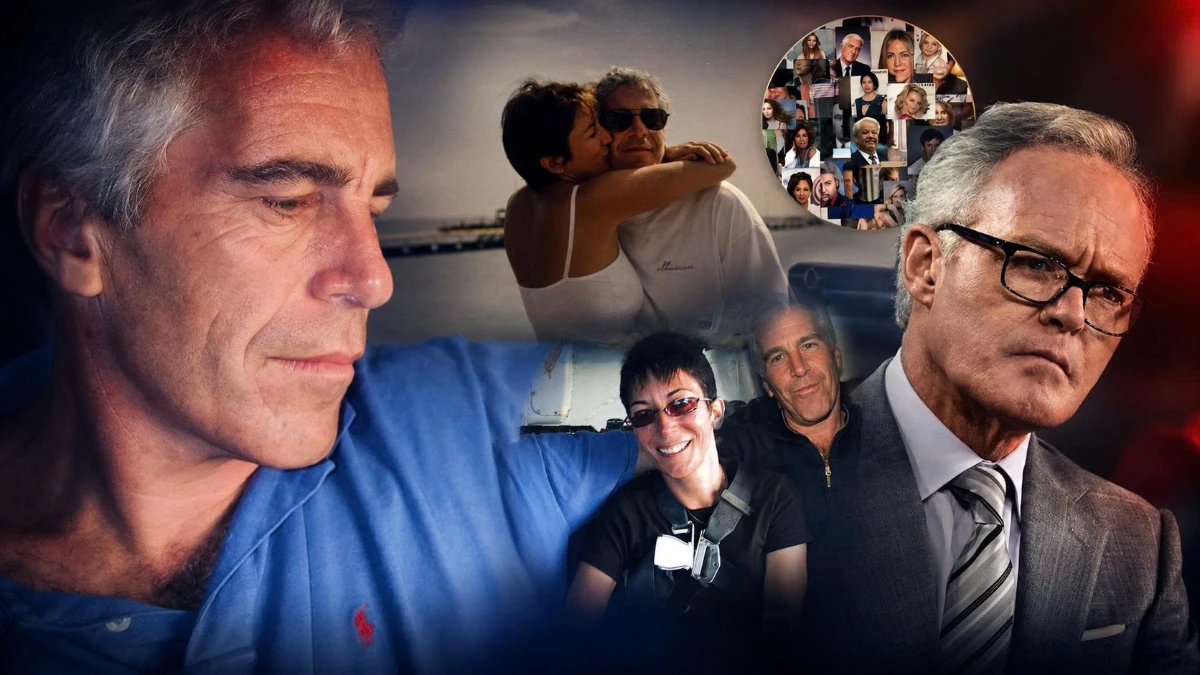
31 MINUTES. 42 NAMES. HOLLYWOOD WASN’T READY FOR THIS.
For thirty-one minutes, social media users claimed they were watching something Hollywood had spent years trying to prevent. There was no red carpet, no studio applause, and no carefully rehearsed introduction. According to the viral post, there was only Scott Pelley, a stack of documents, and a title that immediately sent thousands of people searching for answers: “The Death Report.”
The post alleged that the mysterious report was supported by more than 2,200 pages of legal records. It also claimed that forty-two powerful names appeared during the presentation. Actors, producers, executives, lawyers, and people described only as influential “gatekeepers” were supposedly connected to a story far larger than any single scandal.
But almost immediately, one crucial problem emerged. The post offered dramatic numbers, ominous descriptions, and screenshots stripped of context, yet it did not provide an authenticated recording, a complete document archive, or independent confirmation that the report existed as described.
That absence did not slow the story down. It made people even more curious.
Within hours, shortened clips, reaction videos, and copied captions began circulating across multiple platforms. Some users insisted they had watched the entire thirty-one-minute segment before it disappeared. Others claimed the original upload had been removed, restored, and removed again. A few said they had downloaded copies, but the versions being shared reportedly contained different timestamps, edited audio, or missing sections.
Every inconsistency created another question. If the video was real, why could nobody produce an unedited source? If the documents were genuine, where were the case numbers, court stamps, or links to public records? And if forty-two names had truly been disclosed, why did the lists posted online keep changing?
According to the post, the most disturbing moment happened before the first name was shown.
The screen supposedly went dark. The music stopped. Pelley allegedly looked away from the camera, paused, and delivered a warning that viewers interpreted as more than ordinary legal caution. It was described as a message to anyone attempting to suppress the information—and to anyone preparing to share it without understanding the consequences.
The exact wording remains disputed. Different accounts quote different sentences. Some versions claim the warning concerned evidence preservation. Others say it referred to people who had already tried to stop the alleged report. Several posts dramatically suggest it predicted what would happen inside private offices moments after the broadcast began.
No reliable public evidence currently establishes that Pelley delivered any such warning. Still, the idea of it became the emotional center of the story.
Then came the supposedly larger second claim.
The viral account alleged that, moments after the warning, emergency meetings began behind closed doors. Phones reportedly lit up inside agencies, studios, legal offices, and private residences. Publicists were supposedly told not to comment. Attorneys allegedly began reviewing old agreements. Assistants were said to be searching for documents that had not been discussed in years.
It sounded like a scene written for a political thriller. That was also the problem: the description was vivid enough to feel real, but too vague to verify. No office was identified. No meeting invitation was produced. No participant publicly confirmed receiving an emergency call because of the supposed report.
Yet social media filled the gaps with speculation.
Users compared facial expressions from unrelated interviews. Old photographs were reposted as if they had been taken that night. Public schedule changes were treated as proof of panic. Silence itself became suspicious. If a celebrity denied involvement, some users called the denial rehearsed. If a celebrity said nothing, others argued that the silence revealed even more.
This is how an unverified allegation can become nearly impossible to contain. Every missing piece is transformed into evidence of a cover-up. Every correction is framed as damage control. Every request for documentation is treated as an attempt to protect the powerful.
The reference to 2,200 pages gave the rumor an additional layer of authority. A number that specific sounds measurable. It suggests files, sworn statements, depositions, exhibits, and signatures. But page counts alone prove nothing. Thousands of pages can be mischaracterized, duplicated, unrelated, or entirely invented. Without access to the records, readers cannot determine what those pages contain—or whether they exist at all.
The same caution applies to the alleged list of forty-two names. Being named in a document, even an authentic one, would not automatically establish misconduct. A person can appear as a witness, employee, contact, victim, attorney, investigator, or incidental reference. Context is the difference between information and accusation.
That distinction was largely lost as the post spread.
People began asking not whether the report was authentic, but which famous name would fall first. The conversation shifted from evidence to prediction. Accounts competed to publish increasingly dramatic versions of the list, while viewers rushed toward screenshots that appeared to confirm what they already suspected about wealth, fame, and secrecy.
Still, the post touched a nerve for a reason. Many readers believe powerful institutions protect their own. They have seen genuine scandals remain hidden for years, sometimes through settlements, intimidation, professional pressure, or simple indifference. That history makes a story about suppressed documents feel plausible, even when the particular claims have not been proven.
The emotional logic becomes irresistible: if secrecy happened before, perhaps it is happening again.
But plausibility is not evidence.
A responsible reading of the viral story requires holding two possibilities at once. Important information can be suppressed, and viral claims can also be fabricated. Powerful people can avoid scrutiny, and innocent people can be harmed by false lists. Asking questions is necessary. Treating an unsupported post as a verdict is dangerous.
The unanswered questions remain substantial. Who created the first upload? Where is the original thirty-one-minute recording? What court systems allegedly hold the 2,200 pages? Why do circulating versions disagree about the warning? Who independently verified the forty-two names? And what evidence connects the supposed private meetings to the moment described?
Until those questions receive documented answers, “The Death Report” remains an allegation, not an established investigation.
That may be the most unsettling part of the entire episode. The internet did not need the report to be authenticated before reacting to it. It needed only a recognizable journalist, a precise runtime, a large document count, and the promise of hidden names. Those ingredients were enough to turn uncertainty into certainty for millions of viewers.
By the time skeptics asked for the full footage, the story had already changed shape. It was no longer one post that could be examined. It had become hundreds of retellings, each adding a new detail and pointing to the others as confirmation.
Somewhere inside that noise may be an original source worth investigating. Or there may be nothing more than edited imagery, borrowed authority, and a carefully designed caption. The public cannot know without evidence that survives scrutiny.
For now, the alleged warning continues to travel faster than any document supporting it. The forty-two names remain disputed. The 2,200 pages remain unseen. The closed-door panic remains unconfirmed.
And one question now matters more than every name the post promised to reveal:
Who wanted millions of people to believe this story before they had the chance to verify it?