
In a moment that bridged two worlds often seen as separate, leadership moved from rhetoric to reality — and people noticed.
After Barack Obama publicly called for stronger, more urgent action to address hunger across the United States, Travis Kelce stepped forward with a major donation aimed at making immediate impact. What followed elevated the story even further: Obama personally reached out to Kelce to thank him — a direct acknowledgment that turned a charitable act into a defining moment of modern civic engagement.
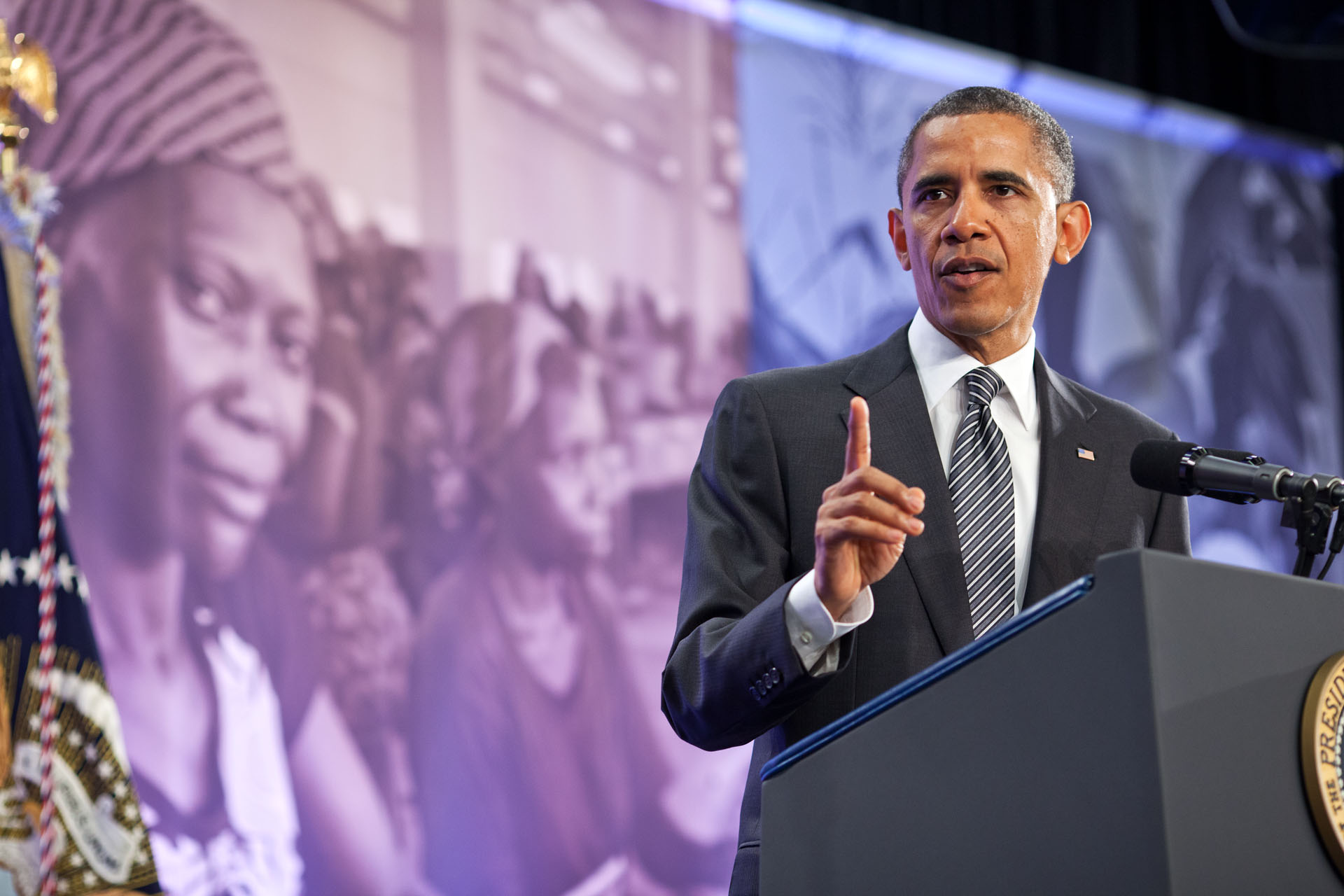
This wasn’t a press-cycle stunt or a carefully staged exchange. According to those familiar with the conversation, the message was simple, sincere, and focused on outcomes. The former president expressed appreciation not just for the generosity, but for the speed and intention behind it — a reminder that leadership is measured not by applause, but by the lives improved when action follows words.
Obama’s call to action had been clear and pointed. Hunger, he emphasized, is not an abstract issue or a distant statistic; it is a daily reality for families, seniors, and children in communities across the country. Rising costs, supply-chain disruptions, and uneven access to nutritious food have compounded a problem that demands both policy attention and immediate support. “We know what works,” Obama said in remarks that quickly circulated online. “What we need now is the will to do it — together.”
Kelce answered that call.

Known publicly as a fierce competitor on Sundays, Kelce has long invested quietly in community work, particularly efforts tied to food access and youth support. This time, the response was swift and substantial — a donation structured to support programs that can put food on tables now, not months from now. While full details are still emerging, early indications suggest the funds will bolster local food banks, school meal initiatives, and distribution networks serving communities under acute pressure.
The personal note from Obama mattered because it underscored something larger than either figure. It signaled that influence carries responsibility — and that when it’s exercised with intention, it can cut through noise and move resources where they’re needed most. For Kelce, the acknowledgment wasn’t about validation; it was about alignment. “If you can help, you should,” one person close to him said. “That’s the whole point.”
Reaction across sports and civic circles was immediate and emotional. Fans praised the clarity of the moment — a rare instance where a public appeal met a tangible response, quickly and decisively. Advocates working on hunger relief described it as a jolt of momentum, the kind that energizes volunteers and opens doors for additional support. “This is how progress accelerates,” one organizer noted. “When leadership inspires action, and action invites more leadership.”
What made the exchange resonate beyond headlines was its tone. There was no triumphalism, no political posturing, no attempt to center ego. Instead, the focus stayed on the issue — and the people affected by it. In an era often defined by division, the message landed: solutions are possible when sectors collaborate and individuals act.

The ripple effects are already visible. Searches for local food banks surged. Donation links circulated widely. Conversations shifted from who said what to how can I help. That shift — from commentary to contribution — is precisely what hunger advocates have been urging for years.
For Obama, the moment reaffirmed a belief he has long voiced: that real change depends on citizens and leaders choosing to show up for one another. For Kelce, it reinforced a personal ethic — that success carries an obligation to lift, not just win.
As more details unfold about where the funds will go and how they’ll be deployed, the significance of this exchange remains clear. It’s not about a single donation or a single thank-you. It’s about a template for impact — one where leadership invites action, action delivers results, and gratitude fuels the next step forward.
In a time when cynicism can feel easier than hope, this moment offered a different narrative. It showed that when the right call meets the right response, progress doesn’t have to wait.
Sometimes, it starts with a message.
Sometimes, it’s answered with a check.
And sometimes, it becomes a reminder that leadership — at its best — feeds people first.
